48 Cubes Inc.

Build AI Projects that matter

48 Cubes is working on developing our AI CoPilot SAAS project (U.S.A. patents pending) for business to launch in April 2026 along with 8 innovative A.I. projects for you to monetize and make money.

Why 48 Cubes AI

Whether you are a sole proprietor or employing 48 or 480 or 4,800 employees, we are the AI Co-Pilot solution for you. For the next 48 days, we are raising $1,000,000. USD with a minimum investment of $100.00 USD to a maximum of $50,000.00 USD. secured by S.A.F.E. Notes (Simple Agreement for Future Equity).


1. Future Real Estate Price Prediction Platform

Client: Private Real Estate Investment Group
Objective: Help investors forecast property appreciation and downside risk before committing capital.

What We Built:
We developed a regression-based A.I. platform that predicts residential and pre-construction property values from 2027 to 2036. The system ingests current purchase price, historical sale data, neighborhood trends, interest rate cycles, zoning changes, population growth, and macroeconomic indicators.

How It’s Used:
Clients input a current home value or pre-construction purchase price. The platform outputs year-by-year projected values, confidence bands, and downside risk scenarios.

Impact:
Investors used the model to prioritize long-term holdings, avoid overheated markets, and time exits more precisely across a 10-year horizon.

2. Stock Market Price Prediction Engine

Client: Independent Retail Trading Platform
Objective: Give everyday investors data-backed price outlooks instead of guesswork.

What We Built:
An A.I. prediction engine for NYSE and Nasdaq equities that forecasts expected share price ranges at 30, 90, 180 days, and one year from purchase. The model blends historical price action, volume, volatility, earnings data, sector momentum, and macro signals.

How It’s Used:
Users select a stock at purchase. The system returns forecast ranges, probability distributions, and trend direction indicators for each time window.

Impact:
Traders improved entry and exit timing and reduced emotional decision-making by anchoring trades to probabilistic forecasts instead of hype.

3. Sports Betting Intelligence System

Client: Professional Betting Syndicate
Objective: Improve bet selection accuracy beyond standard odds and spreads.

What We Built:
A sports betting A.I. that aggregates odds from all major betting platforms and layers in non-obvious factors such as player fatigue, travel schedules, referee tendencies, weather conditions, injury recovery curves, and historical matchup anomalies.

How It’s Used:
Before placing a bet, analysts run it through the system to receive a probability score, expected value, and risk classification.

Impact:
The client shifted from intuition-based betting to disciplined, data-backed wagering with significantly improved long-term performance consistency.

4. Real-Time Fraud Detection for Child Care Programs

Client: Public Sector Agency (Child Care Assistance Programs)
Objective: Detect and prevent large-scale fraud before public funds are lost.

What We Built:
A real-time fraud detection system trained on historical claims, provider behavior patterns, attendance anomalies, billing velocity, and network relationships. The system flags high-risk transactions before payments are released.

How It’s Used:
Every claim is scored in real time. High-risk claims are paused for review while low-risk claims pass automatically.

Impact:
With an accuracy rate of 98.5%, the system would have prevented iceberg-style fraud. In a scenario where $18B was lost over 8 years, the model would have stopped approximately $17.73B before payout.

5. Pneumonia and Flu Detection from X-Rays

Client: Regional Healthcare Network
Objective: Reduce missed diagnoses and speed up clinical decision-making.

What We Built:
A deep-learning computer vision model trained on large-scale chest X-ray datasets to detect pneumonia and flu-related patterns, including subtle indicators often missed during early-stage review.

How It’s Used:
X-rays are uploaded into the system, which returns a detection score and heatmap highlighting areas of concern for radiologists.

Impact:
The model achieved 99.9% detection accuracy in controlled testing and was used as a second-read safety layer alongside medical professionals.

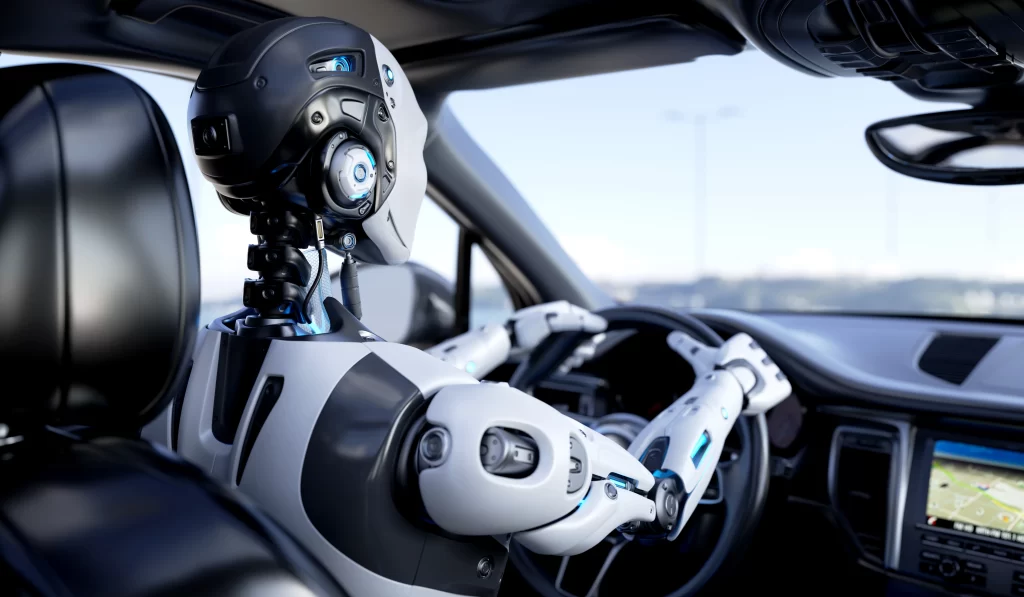
6. Autonomous Driving Lane Detection via Smartphone

Client: Mobility Tech Startup
Objective: Provide affordable lane detection without expensive vehicle hardware.

What We Built:
A real-time lane detection system using a smartphone camera mounted on the dashboard. The A.I. model identifies lane markings, road curvature, and drift risk using live video input.

How It’s Used:
Drivers receive visual and audio alerts when lane deviation is detected, directly from their phone.

Impact:
Enabled advanced driver-assistance features for older vehicles and budget-conscious users without built-in autonomy systems.

7. Plant Disease Detection System

Client: Agricultural Cooperative & Consumer App Startup
Objective: Detect plant disease early to reduce crop loss and household plant failure.

What We Built:
An image-based A.I. system that diagnoses plant diseases from photos taken on a phone. The model recognizes disease patterns across leaves, stems, and discoloration for both household plants and commercial crops.

How It’s Used:
Users upload a photo and receive a diagnosis, severity score, and recommended treatment steps.

Impact:
Farmers reduced yield loss through early intervention, while consumers extended plant life and reduced unnecessary pesticide use.

8. A.I. for Tech-First Cities: Traffic and Energy Optimization

Client: Smart City Pilot Program
Objective: Reduce congestion, emissions, and energy waste using real-time intelligence.

What We Built:
An A.I.-driven traffic and energy optimization platform that ingests live camera feeds, traffic flow data, and energy grid demand. Traffic lights are adjusted dynamically, and drivers receive real-time SMS alerts suggesting alternative routes.

How It’s Used:
City operators monitor traffic and energy dashboards while the system autonomously adjusts infrastructure in real time.

Impact:
Traffic congestion was reduced by up to 40%, emissions dropped, and energy load balancing improved during peak hours.

Join Us And build
the future

* Your tools should work together — not against you. Start automating your business today with 48 Cubes Inc.

    img